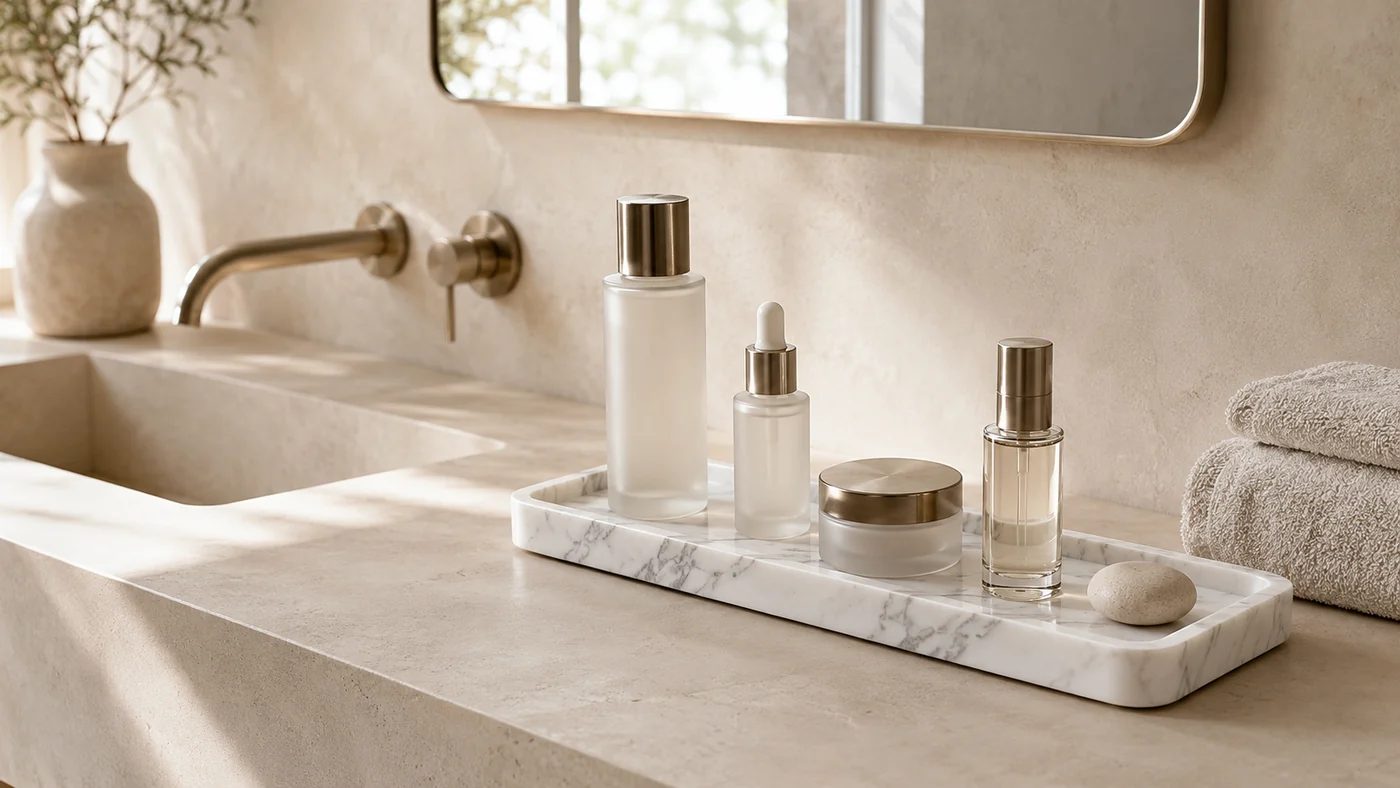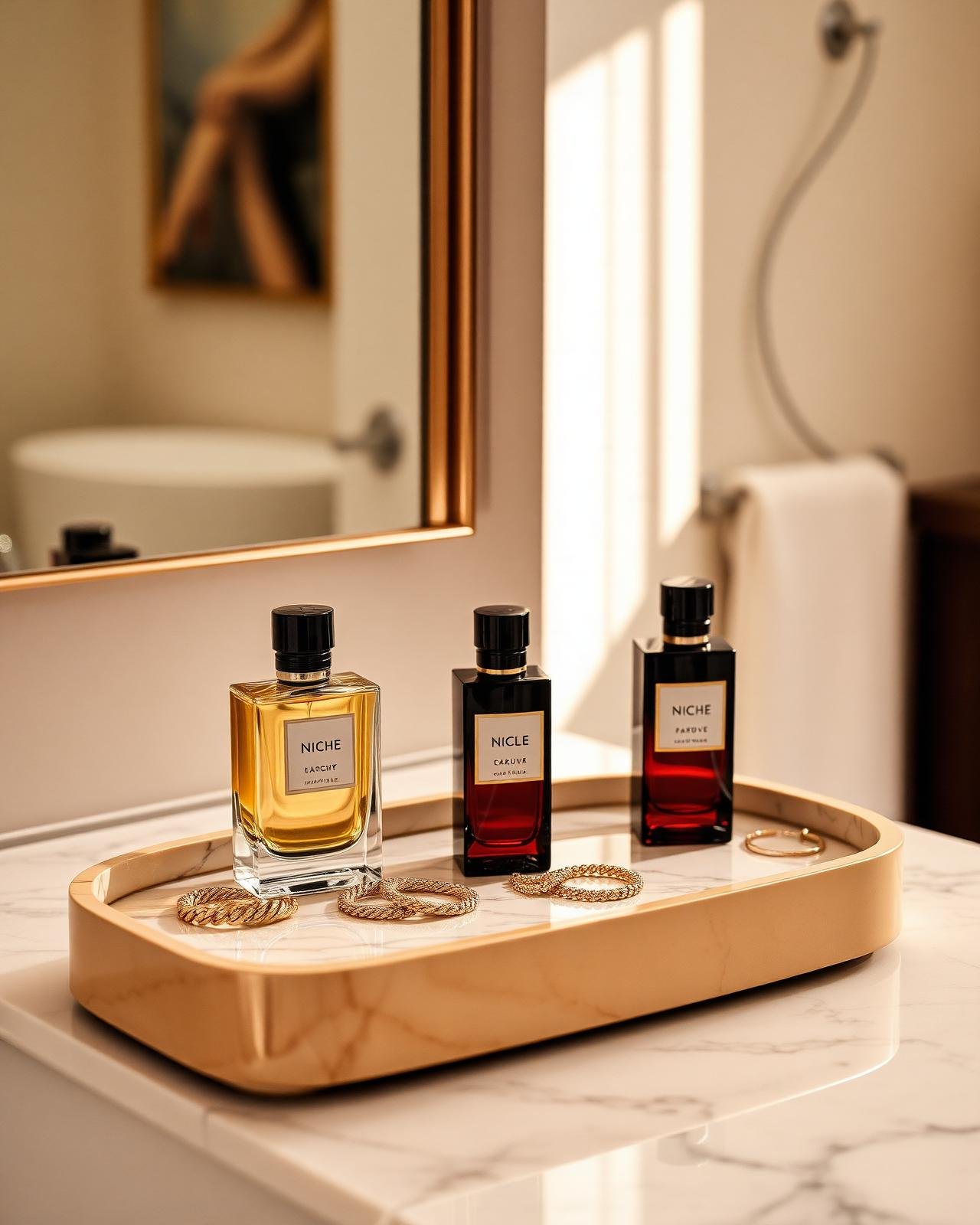
Clean Gently
Use a clean, soft cloth and a suitable pH-neutral stone cleaner.
NATURAL STONE CARE
Learn how to clean, protect, handle and maintain your Marble Trays product while preserving the natural beauty and character of the stone.
Care requirements may vary according to the stone, finish, sealing, intended use and environment. Always follow the product-specific guidance supplied with your order.
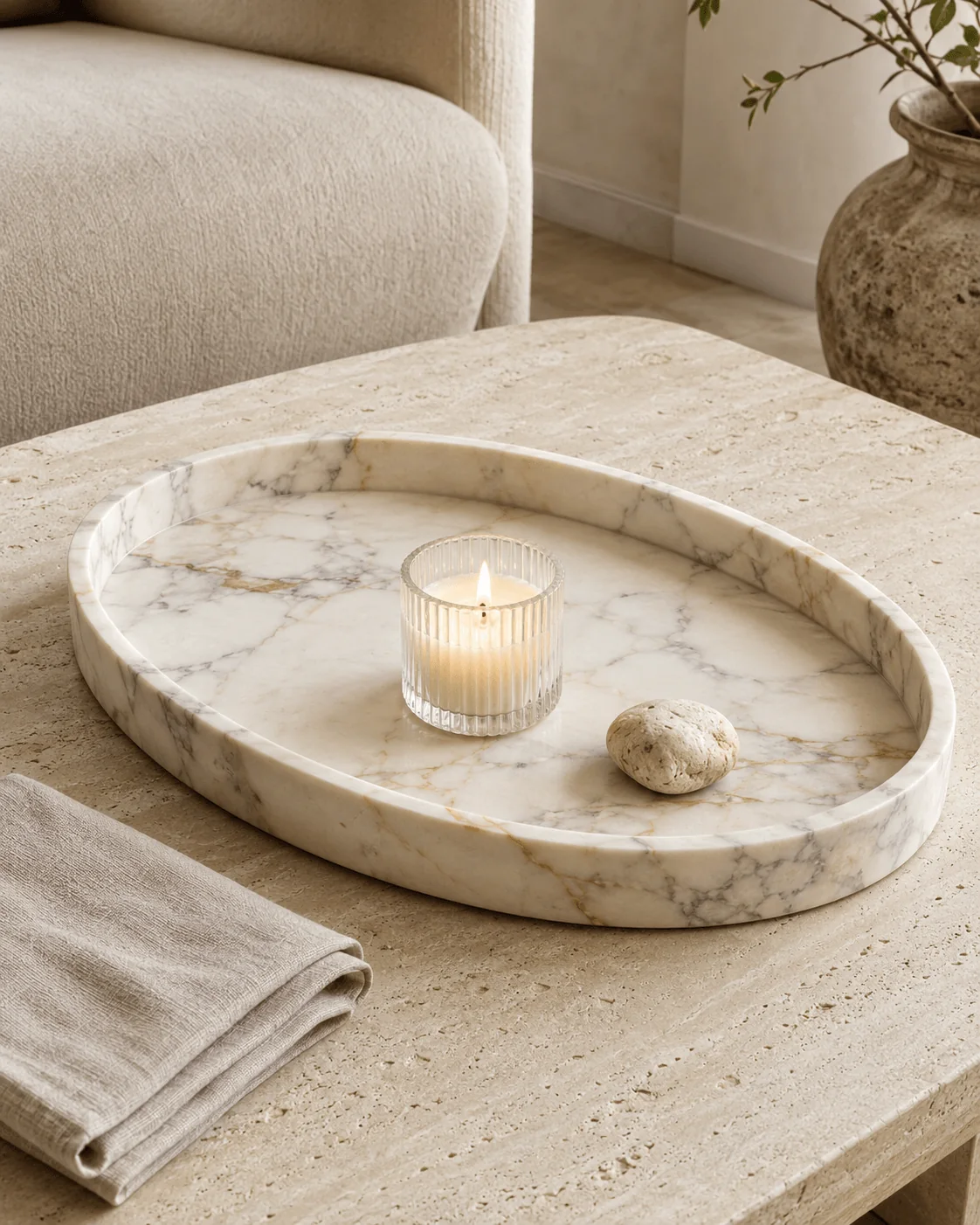
Use a clean, soft cloth and a suitable pH-neutral stone cleaner.
Do not leave liquids, oils, cosmetics or coloured products sitting on the stone.
Vinegar, lemon and acidic cleaners may affect acid-sensitive stone.
Use coasters, liners, felt pads or protective inserts where appropriate.
Move the tray carefully and avoid dragging it across furniture or worktops.
Different stones, finishes and sealers may require different care.
Natural stone is durable and intended to be enjoyed, but it is not maintenance-free. The right care depends on the material, finish, sealer, hardware, intended use and environment in which the tray is placed.
Product-specific instructions supplied with an order take priority over this general guide. A polished marble tray, filled travertine tray, onyx piece and porcelain surface may respond differently to moisture, acids, cleaning products and daily handling.
Natural veining, shade movement, mineral markings, pores and other inherent characteristics are not damage by themselves. Sealing can help reduce absorption where suitable, but it does not make stone stain-proof or prevent every form of etching or surface change.
Stop using the product and request guidance when there is a possible structural crack, unstable hardware, a sharp unfinished area or damage that could worsen through continued use.
Open the packaging carefully and retain it until the product, accessories and visible condition have been checked. Do not use blades close to the stone, handles, feet or finished edges.
Confirm that the delivered product matches the order and that any included handles, feet, inserts or accessories are present. Inspect the rim, corners, base and hardware in good light before placing objects on the tray.
Remove loose packaging dust with a clean, slightly damp soft cloth, then dry the complete product. Review the product listing and supplied care information to confirm where and how the tray may be used.
Place the tray on a clean, level and stable surface that can support its weight. Check that protective feet or pads sit evenly and that no grit is trapped beneath the product.
Remove bottles, candles, jewellery, tableware and decorative objects so the entire surface can be reached. Check the bases of those objects for residue before placing them back.
Dust the tray with a clean microfibre or soft cotton cloth. Use clean lukewarm water sparingly or a suitable pH-neutral stone cleaner when the material and finish permit it.
Wipe gently rather than scrubbing. Remove cleaner residue when the product instructions require rinsing, then dry the top, rim, underside, feet and areas around hardware completely.
Use a fresh cloth when cosmetics, oil, fragrance or coloured residue is present. Reusing a dirty cloth can spread residue across the stone rather than remove it.
Clear the complete tray and check the base of every item.
Use a clean, dry soft cloth to remove loose particles.
Use clean water sparingly or a suitable cleaner.
Rinse only where the cleaner instructions require it.
Dry the surface, edges, underside, feet and hardware.
Return clean objects only after the tray is dry.
A clean soft cloth and a cleaner specifically identified as suitable for the exact material are the safest starting point. Material-specific advice always overrides a general product list.
Read the cleaner label, dilution instructions and finish compatibility before use. A product suitable for one natural stone may be unsuitable for another, and a cleaner described as multi-surface is not automatically stone-safe.
Strong stain treatments, poultices, sealers and finish-restoration products should be selected for the material and mark being treated. Ask for guidance before applying an unfamiliar treatment to a visible surface.
Acidic, highly alkaline, abrasive or solvent-heavy products can alter the finish, react with minerals, discolour a sealer or damage metal details. The exact reaction depends on the material and concentration.
Never mix cleaning chemicals. Combining products can produce harmful fumes and unpredictable reactions, while residue from one cleaner may react with another.
Avoid rough tools even when the mark appears stubborn. Aggressive scrubbing can turn a removable residue into a permanent scratch or dull patch.
Respond quickly without rubbing the spill across a larger area. Blot liquids with a clean absorbent cloth, remove the source and keep coloured, oily or strongly scented products away from the surrounding stone.
Clean the area using guidance suitable for the material, then dry it and allow the colour to settle. Porous stone can temporarily look darker while damp, so assess the result after it has dried fully.
Water, oils, creams, makeup, perfume, diffuser liquid, coffee, tea, juice, food residue and candle wax behave differently. Photograph the mark before using any treatment and record what caused it when known.
Some absorbed marks may require a professionally selected poultice or restoration assessment. No treatment can be guaranteed to remove every stain completely.
Absorb the spill without spreading it.
Lift the bottle, food, wax or object causing the mark.
Use guidance suitable for the material and finish.
Remove moisture and allow the stone to dry fully.
Temporary darkening may reduce as moisture evaporates.
Share photographs when the mark remains or the cause is unknown.
A stain is absorbed material that changes colour. Etching is a physical change to the surface caused by a chemical reaction, often appearing as a dull, lighter or roughened patch on acid-sensitive stone.
A scratch is a physical line or abrasion. Water darkening may be temporary, while cleaner residue can create a film or streak. Loss of polish may require refinishing rather than stain treatment.
Natural veins, pores and fissures should not be treated automatically as damage. A possible structural crack is different because it may pass through the stone, change stability or continue to open.
Photograph the issue in natural light before attempting a treatment. Avoid repeating strong cleaning when the surface has already changed, because further chemical exposure may enlarge the affected area.
Some natural stones and finishes may be sealed to help reduce absorption. The sealer type, application method and maintenance interval depend on the stone, finish, product use and environment.
A sealer does not make stone waterproof, stain-proof or immune to etching. Spills should still be removed promptly, and acidic or unsuitable cleaning products should still be avoided.
Changes in absorption, darker wet marks, frequent use or professional assessment may indicate that the sealer should be reviewed. Do not apply a new product over an unknown existing treatment without compatibility guidance.
Professional application may be appropriate for delicate, valuable or highly visible products. Any resealing interval shown on a material or product record takes priority over general advice.
Remove all objects before moving the tray. Clear the route, dry your hands and make sure the destination surface is ready before lifting.
Use both hands to support the complete base and keep the tray approximately horizontal. Large or heavy pieces may require two people.
Do not twist the product, carry it while wet, lift from one corner or place fingers beneath an unsupported projecting edge. Decorative handles should not be treated as load-bearing unless the product record confirms that use.
Lower the tray gently rather than sliding it into position. Check beneath the product for trapped grit before final placement.
Natural-stone trays can be substantial. Confirm that the furniture, shelf or worktop can support the product and the objects placed on it.
Keep the tray base, furniture and protective feet clean and dry. Fine sand, dust or grit trapped beneath the product can scratch a delicate surface when the tray is moved.
Use suitable felt pads, rubber feet, liners or protective inserts where needed. Check them periodically and replace any item that has shifted, hardened, worn through or collected grit.
Avoid prolonged trapped moisture between the tray and furniture. Lift the product for cleaning rather than pushing a cloth underneath it.
Bathroom and vanity areas expose trays to water, humidity, toothpaste, soap, skincare, hair products, cosmetics and cleaning sprays. Suitability depends on the stone, finish and product specification.
Wipe splashes and standing water promptly. Lift bottles during cleaning so residue cannot remain hidden around their bases or beneath pumps and caps.
Avoid storing leaking containers and keep highly coloured, oily or acidic products in a suitable insert or coaster where appropriate. Ventilation and regular drying help reduce water marks and residue build-up.
Do not spray bathroom cleaner across the tray. Apply a suitable product to the cloth instead, controlling where it touches the stone and hardware.
Perfume, skincare and cosmetic products can contain oils, dyes, acids and other ingredients that may mark stone or affect a finish. Keep bottles closed and wipe their bases before placing them on the tray.
Blot leaks or spills immediately. Do not leave product residue around pumps, caps, jars or brushes, and avoid allowing moisture to remain trapped beneath bottles.
A suitable coaster or liner can provide extra protection for frequently used products. Lift every bottle when cleaning rather than wiping around it.
Photograph an unknown mark before attempting treatment and record the product that caused it when possible.
Use a stable candle holder and place the candle so heat and flame remain away from stone edges, handles, feet, walls, flowers and other objects. Never leave a burning candle unattended.
Do not assume the tray is fireproof or suitable for direct flame. Concentrated heat can affect the stone, sealer, adhesive, hardware or supporting furniture.
Allow wax to cool before removal. Lift it gently with a non-scratching method rather than using a sharp metal blade, then clean any oily residue using material-appropriate guidance.
Follow the candle manufacturer’s instructions, keep wicks trimmed and remove soot before it accumulates on the tray or nearby surfaces.
Use a tray for direct food presentation only when the product record confirms that the material, finish, sealer and construction are suitable. General decorative styling does not establish food-contact approval.
Use plates, bowls, napkins or a suitable liner where appropriate. Avoid direct contact with acidic foods, strongly coloured sauces and oily ingredients unless the product-specific guidance permits it.
Do not place very hot cookware directly on the stone, use the tray as a chopping board, put it in a dishwasher, microwave or oven, or soak it in water.
Remove food residue promptly, clean using suitable guidance and dry the complete product. Do not assume every sealer is approved for direct food contact.
Outdoor and humid-area suitability depends on the material, finish, sealer, hardware, construction and degree of exposure. A decorative indoor tray should not be moved outdoors without confirming suitability.
In UAE conditions, strong sunlight, high surface temperatures, humidity, coastal salt, sand and dust can change appearance and maintenance needs. Covered and shaded areas generally reduce exposure but do not eliminate it.
Keep water from pooling, dry the tray after rain or cleaning, remove abrasive sand before wiping and inspect metal details for moisture or salt residue.
Product-specific guidance takes priority. Uncovered exposure, direct sun and permanent outdoor placement should be assessed before ordering.
Wipe handles, feet and other hardware with a clean soft cloth. Prevent standing water, perfume, cosmetic residue and cleaning spray from collecting around fittings.
Do not use harsh metal polish, abrasive tools, unauthorized glue or excessive force. Over-tightening a fitting can damage stone or hardware.
Decorative handles may be intended for styling rather than carrying. Support the stone base unless the product-specific instructions explicitly approve lifting by the handles.
Stop using the product if a handle becomes loose, a foot shifts, the tray rocks or any fitting creates stress around the stone. Request guidance before attempting repair.
Store the tray on a clean, dry, level and fully supporting surface. Protect edges and corners from impact and keep the product away from harsh chemicals or areas where heavy objects may fall onto it.
Do not lean a heavy tray vertically unless its design and storage method have been approved. Avoid stacking stone products directly against one another.
When stacking is unavoidable for short-term professional handling, use clean soft protection between pieces and confirm that the lower product can support the load.
Retain suitable original packaging when relocation may be required. Store in a ventilated environment and keep hardware dry.
Depending on the stone, finish and location of the concern, assessment may consider re-polishing, edge refinishing, surface restoration, handle refitting, foot replacement, hardware adjustment, stain treatment or minor chip repair.
Repair feasibility is not guaranteed. Natural veining remains visible, colour may differ after treatment and a repaired area may not become visually invisible.
Do not attempt structural repairs, drill the stone, use unauthorized adhesive or ship a heavy product without written instructions. Incorrect handling can make the issue worse and create a safety risk.
Where technically and commercially practical, repair or restoration may be considered before replacement. Share clear photographs and the product details for an initial assessment.
Request a Care AssessmentMaterial family, exact stone, finish and sealer affect care. The finder below uses published material records where available and approved general guidance where a more specific record has not yet been provided.
Marble and limestone may be acid-sensitive. Travertine may include open or filled pores. Onyx can require careful handling because of its visual and structural character. Granite and quartzite vary by composition and finish.
Terrazzo care depends on its binder, aggregate, finish and sealer. Porcelain is a manufactured ceramic surface rather than natural stone and may use different cleaning guidance.
Always follow the exact product record and supplied care card when they provide more specific instructions.
Contact Marble Trays when the material is unknown, product-specific instructions are unclear or a mark remains after gentle cleaning.
Request prompt guidance when the stone appears structurally cracked, a handle becomes loose, a foot becomes unstable, an edge becomes unsafe or the product has been damaged.
The team can also help assess possible etching, staining, uneven finish, resealing questions, unsuitable chemical exposure and repair or restoration options.
Provide the order or product details, material name when known, photographs in natural light, a description of what happened and any cleaner or substance already used.
These are general starting points. Material- and product-specific guidance always takes priority.
| Generally suitable | Generally avoid |
|---|---|
| Clean soft microfibre cloth | Abrasive sponge or steel wool |
| pH-neutral cleaner suitable for the material | Vinegar or lemon-based cleaner |
| Clean lukewarm water used sparingly | Acidic bathroom cleaner or descaler |
| Soft cotton cloth | Strong bleach or ammonia-heavy cleaner |
| Protective coaster, liner or felt pad | Scouring powder or rough pad |
| Gentle blotting | Aggressive scrubbing |
| Verified stone-safe care product | Unknown or mixed chemicals |
Act promptly, keep the response gentle and assess the result only after the stone has dried.
Absorb liquid with a clean cloth without spreading it.
Lift the bottle, food, wax or object causing the spill.
Use suitable guidance for the exact material.
Remove cleaner residue only where instructions require it.
Dry the surface, rim, underside and hardware.
Temporary moisture darkening may reduce as the stone dries.
| Issue | First response | Avoid |
|---|---|---|
| Water mark | Blot, clean gently and allow the stone to dry fully | Heat guns, hairdryers or aggressive rubbing |
| Oil or cream | Lift residue, blot and request material-specific stain guidance | Strong degreaser or spreading the oil |
| Perfume or cosmetic spill | Blot immediately, clean gently and photograph any remaining mark | Acidic or solvent-heavy treatment |
| Candle wax | Allow wax to cool, lift gently and treat oily residue carefully | Sharp metal scraping |
| Coloured liquid | Blot promptly, clean with suitable guidance and dry | Bleach or repeated harsh scrubbing |
| Unknown mark | Photograph it, identify recent products and ask for guidance | Experimenting with multiple chemicals |
MATERIAL-SPECIFIC CARE
Browse published material families. The exact product record and supplied care instructions remain authoritative.
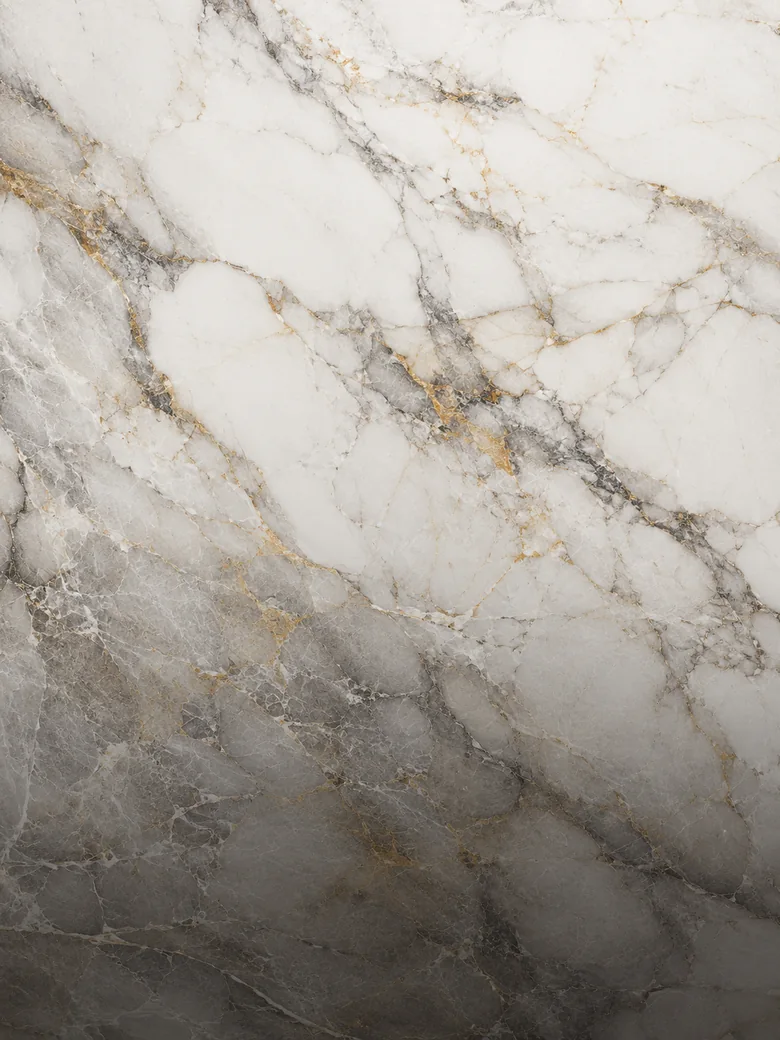
Natural Stone
Marble may be acid-sensitive and can etch. Use a suitable pH-neutral cleaner, blot spills promptly and avoid abrasive treatment.
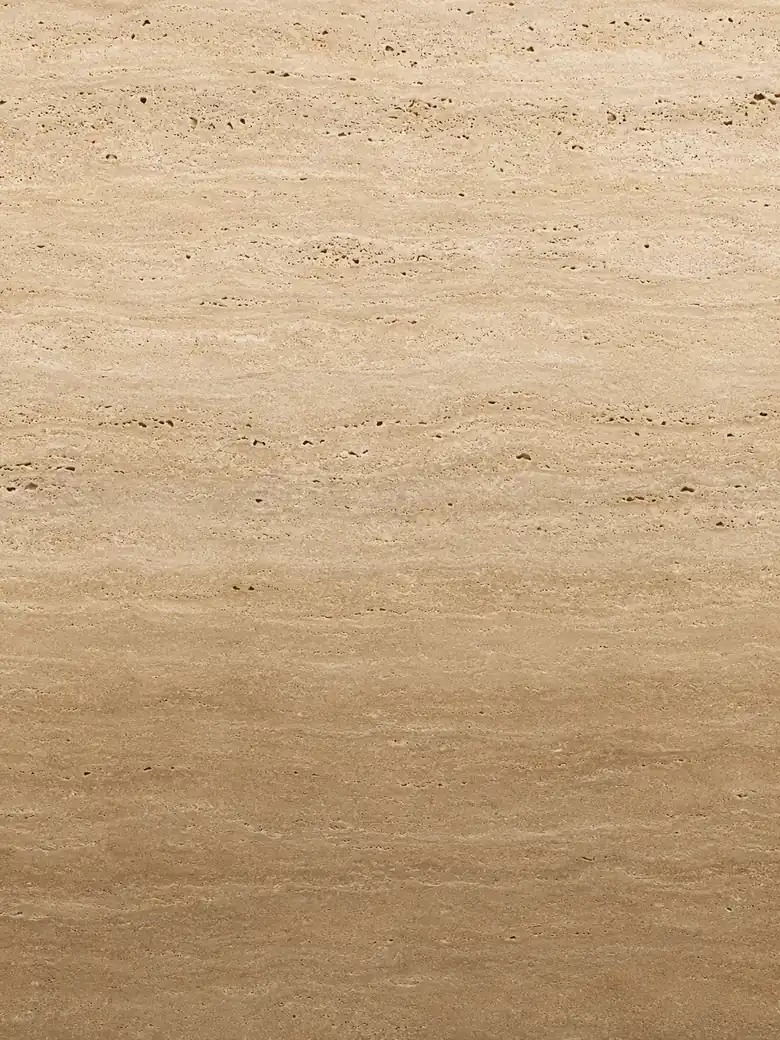
Natural Stone
Travertine may contain open or filled pores. Clean gently, avoid acids and keep residue from collecting in textured or filled areas.
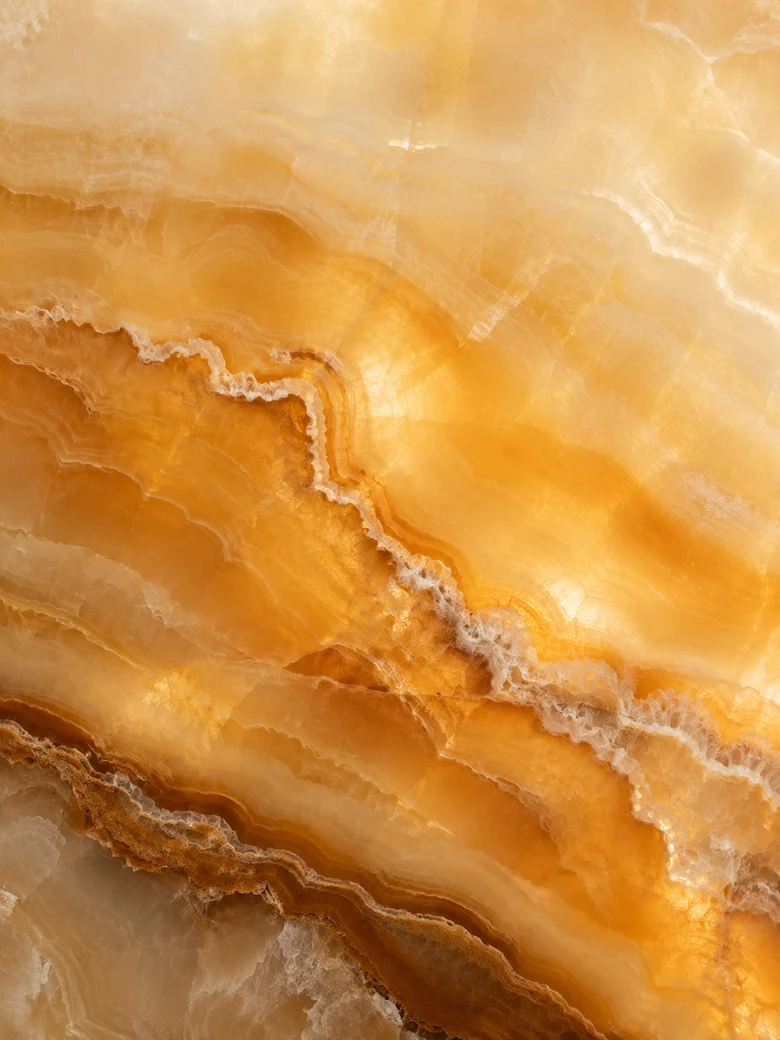
Natural Stone
Onyx is valued for visual movement and may need careful handling. Avoid impact, strong chemicals and unsupported lifting.

Natural Stone
Granite care varies by composition, finish and sealer. Use a verified cleaner and do not assume all granites respond identically.
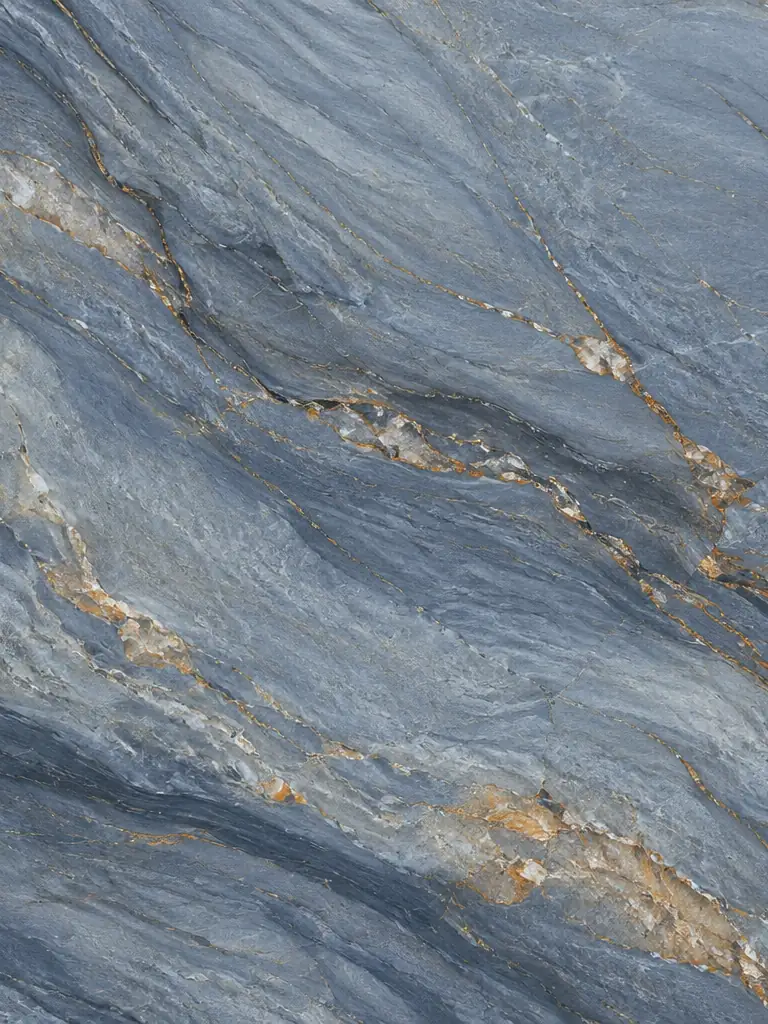
Natural Stone
Natural quartzite is different from engineered quartz. Care depends on the exact stone, finish and treatment.
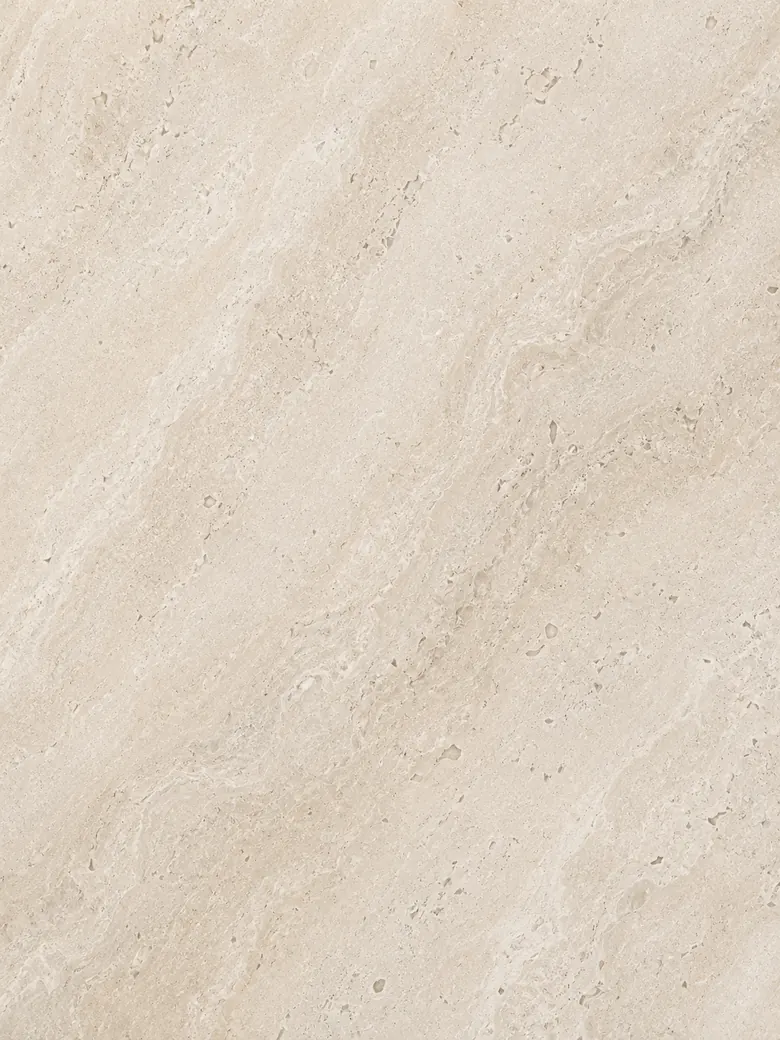
Natural Stone
Limestone may be porous and acid-sensitive. Use gentle cleaning, avoid acidic substances and respond to spills promptly.
Refined Surface
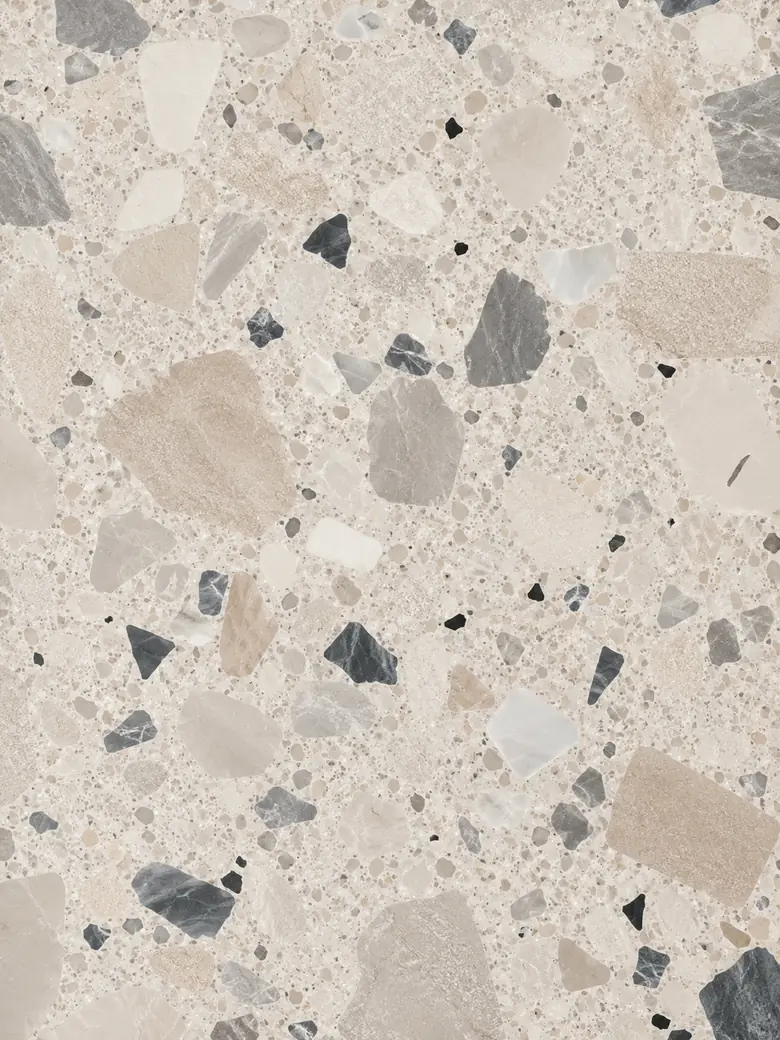
Terrazzo care depends on its binder, aggregate, finish and sealer. Use only guidance appropriate to the exact surface.

Manufactured Surface
Porcelain is a manufactured ceramic surface rather than natural stone. Cleaning depends on the finish, grout or joints and hardware used.
Acids may etch sensitive natural stone and dull the finish.
Long contact increases the chance of absorption or surface change.
Rough tools can scratch or dull the stone.
Dragging may damage the tray base and the furniture beneath it.
Support the stone base unless the product confirms load-bearing handles.
Incorrect adhesive, drilling or refinishing can worsen the concern.
Remove objects, dust with a clean soft cloth, wipe gently with clean water used sparingly or a suitable pH-neutral stone cleaner, remove residue where required and dry the complete tray. Follow the exact material and product guidance first.
Clean water may generally be used sparingly for suitable products, but do not soak the stone or leave pooled moisture. Some materials, finishes, fills, sealers and hardware require more specific guidance.
Avoid vinegar, lemon, acidic bathroom cleaner, harsh descaler, abrasive powder, rough scouring pads and unknown chemical mixtures. The reaction varies by material, so check the product-specific instructions.
Vinegar is acidic and can etch marble and other acid-sensitive stones. Use a verified pH-neutral cleaner instead.
It is a cleaner formulated close to neutral pH. The label should also confirm suitability for the exact stone or surface, because pH alone does not guarantee compatibility.
Blot spills as soon as practical. Remove the source, clean gently using suitable guidance, dry the area and inspect after the stone has dried fully.
A stain changes colour because material has been absorbed. Etching is a physical surface change caused by a chemical reaction and may appear dull, pale or rough. The treatments are different.
That depends on the exact material, finish, sealer already used, intended use and environment. Product- or material-specific guidance should confirm whether sealing is relevant.
There is no universal interval. Review the verified guidance for the material and product, and request assessment if absorption or use conditions suggest the sealer should be checked.
Perfume and cosmetic products can contain ingredients that may mark stone or affect a finish. Keep containers clean, blot leaks immediately and use suitable protection where appropriate.
Use a stable candle holder, keep direct flame and concentrated heat away from the stone and hardware, and never leave a candle unattended. The tray should not be described or treated as fireproof.
Only when the product listing confirms the intended food-presentation use. Use plates or liners where appropriate and do not assume every material or sealer is suitable for direct food contact.
Selected products may suit vanity use, but standing water, cosmetics, humidity and bathroom cleaners require careful management. Confirm the exact product and material suitability.
Outdoor suitability depends on material, finish, sealer, hardware and exposure. Confirm the product-specific guidance before using a tray on a terrace, balcony or exterior surface.
Remove all objects, support the complete base with both hands, keep it level and use assistance for larger pieces. Do not drag it or lift by decorative hardware unless approved.
Only when the product-specific instructions confirm that the handles are load-bearing. Otherwise, support the stone base with both hands.
Allow wax to cool, lift it gently without sharp metal scraping and treat any oily residue using material-appropriate guidance.
Some concerns may be assessed for refinishing or repair, but feasibility and visibility depend on the material, finish, location and severity. Repair cannot be guaranteed to become invisible.
Photograph the mark, identify the substance when possible, avoid strong experimental treatments and share the details for material-specific guidance.
Use the material care finder on this page, open the relevant material page and follow the product-specific care information supplied with your order.
PRODUCT CARE SUPPORT
Tell us the material, finish, product use and care concern so the Marble Trays team can provide suitable guidance.
PRESERVE YOUR STONE
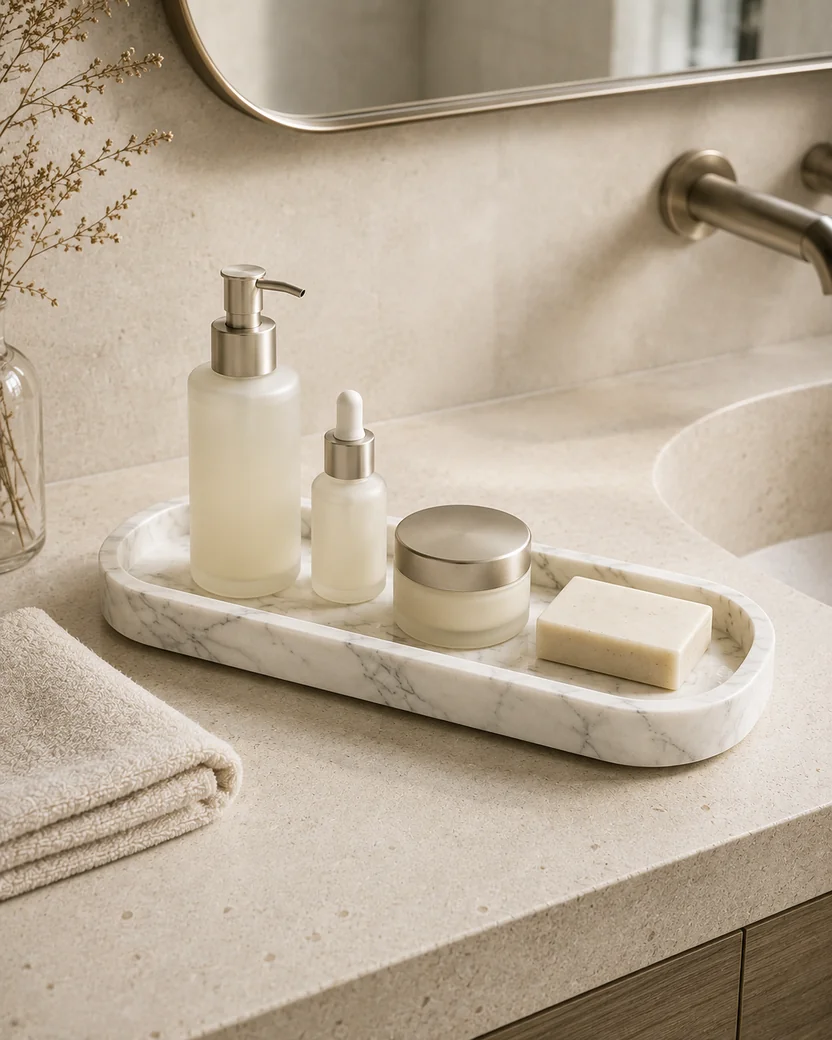
Use suitable products, respond to spills promptly and follow material-specific guidance to preserve your tray’s finish and natural character.