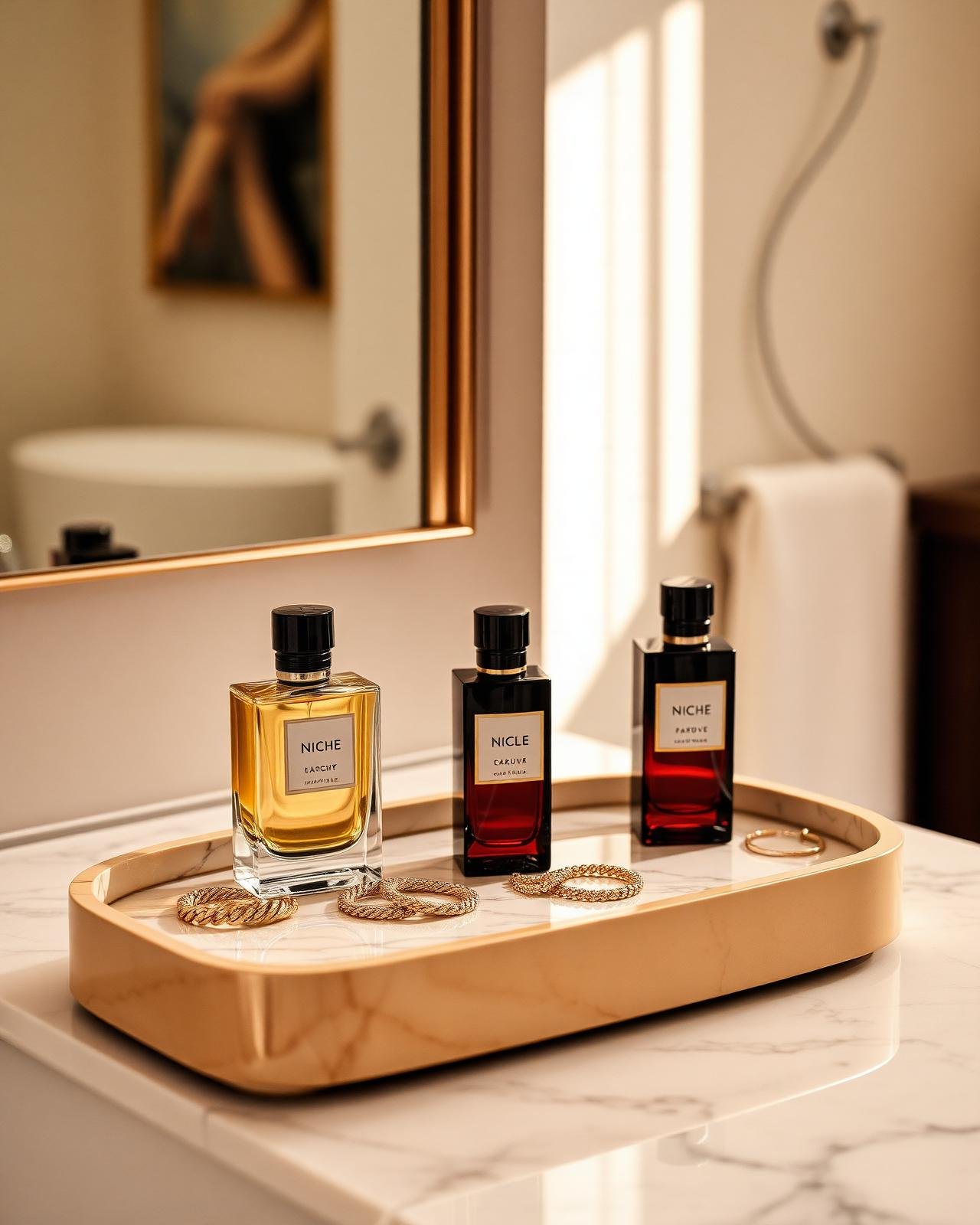
BUYING GUIDE
How to Choose a Marble Tray
The right marble tray should suit its surface, intended use and everyday handling. This guide explains how to compare proportion, shape, stone, finish, usable area and care before choosing a ready-made or bespoke piece.
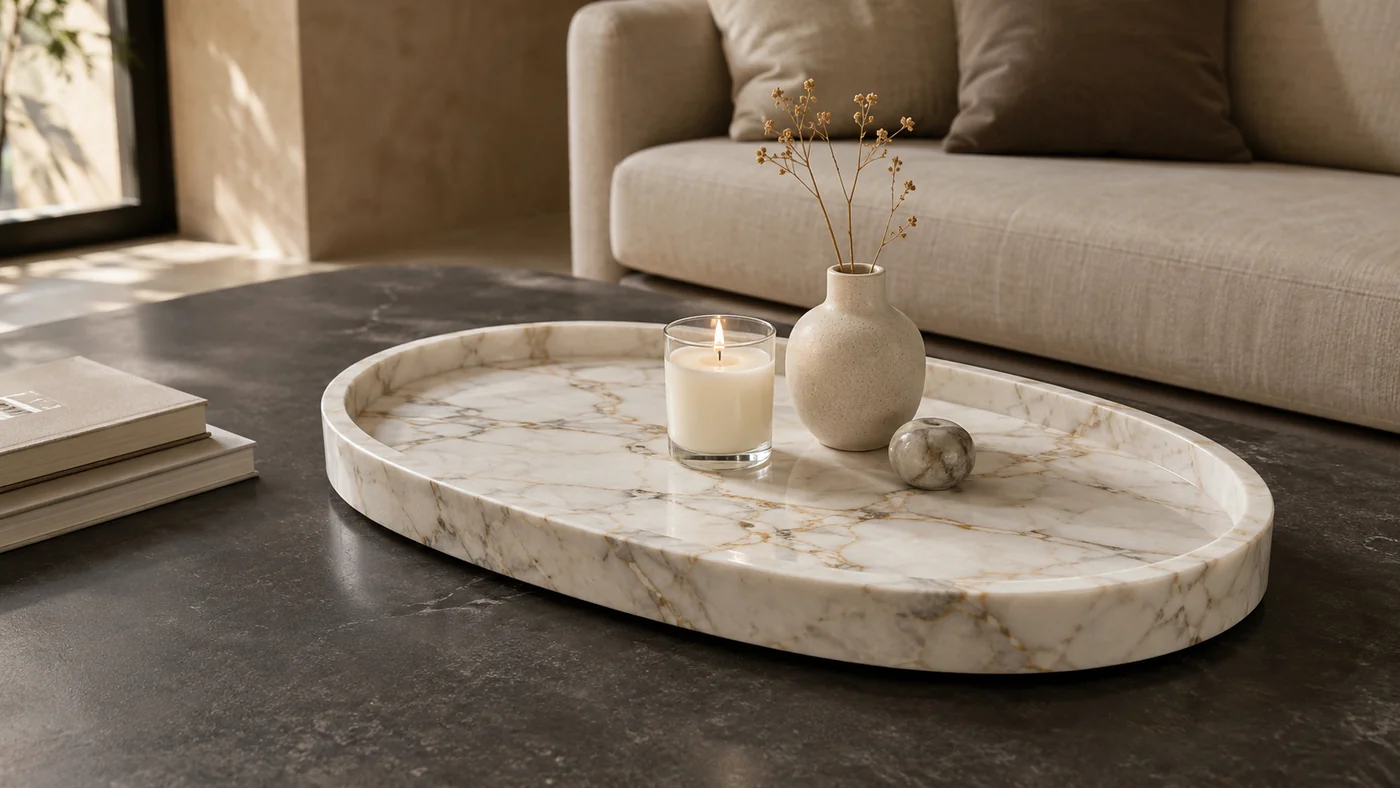
QUICK TAKE
Begin with the surface and intended use, then choose dimensions that preserve visible space around the tray. Compare shape, stone, finish and weight together rather than treating them as separate decisions.
Aim to leave roughly 20–30% of the supporting surface visible when the arrangement allows.In This Guide
- 1.Choose the Intended Use Before the Material
- 2.Common Tray Uses
- 3.Measure the Supporting Surface
- 4.Tray-to-Surface Proportion
- 5.General Size Reference
- 6.Select a Shape That Supports the Surface
- 7.Tray Shape Options
- 8.Choose the Material for Colour, Movement and Use
- 9.Materials to Compare
- 10.Pick a Finish That Matches the Look and Care Routine
- 11.Common Finish Characters
- 12.Consider Weight, Rim Height and Internal Space
- 13.Handling Principles
- 14.Common Selection Mistakes
- 15.Before You Order
- 16.Marble Trays to Explore
- 17.Shape Comparison at a Glance
- 18.Advantages and Considerations
- 19.Need a Tray for Exact Dimensions?
Table of Contents
START WITH PURPOSE
Choose the Intended Use Before the Material
A tray for a coffee table, vanity, perfume display or occasional serving task needs a different balance of dimensions, weight and surface character.
Start by deciding where the tray will live and what it needs to hold. A coffee-table tray often acts as a visual anchor for books, candles and small objects, while a vanity tray normally benefits from a narrower footprint and an easy-to-wipe finish.
The intended use also changes how often the piece will be moved. A large solid-stone tray can create a strong focal point, but a smaller format may be more practical when it needs to be lifted regularly or repositioned during cleaning.
Defining the use first prevents later choices from becoming purely decorative. It helps narrow the suitable size, shape, material family, finish and edge profile before you compare individual slabs or patterns.
PROPORTION
Measure the Supporting Surface
Good proportion allows the tray to feel intentional without overpowering the table, vanity or console.
Measure the usable width and depth of the supporting surface rather than relying on the furniture’s overall dimensions. Curved edges, raised borders, handles or nearby objects may reduce the practical area available for the tray.
A useful starting point is to preserve visible space around the tray so the surrounding surface remains part of the composition. The exact amount depends on the furniture shape and styling density, but the tray should not appear squeezed against every edge.
Also compare external and internal tray dimensions. A raised rim reduces the usable area, so two trays with the same external length can hold different arrangements depending on rim thickness and corner radius.
Tray-to-Surface Proportion
General Size Reference
These ranges are starting points rather than fixed rules; the furniture form and intended arrangement should be reviewed together.
| Supporting Surface | Suggested Tray Range | Useful For |
|---|---|---|
| Round table 60–80 cm | 30–40 cm diameter | Compact styling and candles |
| Round table 80–100 cm | 40–50 cm diameter | Books, vessels and layered objects |
| Rectangular table 90–120 cm | 30–40 × 40–60 cm | Balanced everyday styling |
| Rectangular table 120–150 cm | 40–60 × 50–70 cm | Large-format statement arrangements |
| Vanity or console 70–100 cm | 16–25 × 30–45 cm | Perfume, skincare and daily essentials |
Confirm the exact external dimensions, internal usable area, rim profile and weight before purchase.
FORM & BALANCE
Select a Shape That Supports the Surface
Shape changes both the usable area and the visual relationship between the tray and the furniture beneath it.
The best shape does not always repeat the table shape. A contrasting form can introduce structure, while a related form can create a quieter and more continuous composition.
Round and Oval Trays
Round trays soften angular furniture and work well for centred arrangements. Oval trays provide more usable length while retaining a gentle profile, making them useful for layered objects or elongated surfaces.
Both shapes avoid pronounced corners and can feel visually lighter than a rectangular tray of a similar footprint.
Rectangular and Rounded-Rectangle Trays
Rectangular forms organise books, bottles and grouped objects efficiently. Rounded corners soften the geometry and can make a substantial tray easier to integrate into a residential interior.
Check the internal corner radius because it affects how boxes, bottles and other straight-edged objects sit inside the rim.
Capsule, Organic and Bespoke Shapes
Capsule and organic trays introduce a more sculptural outline. They work best when the available surface and intended objects are reviewed together rather than selected only from appearance.
Bespoke shapes can respond to a specific furniture plan, but feasibility depends on the selected stone, slab condition, thickness and production requirements.
Tray Shape Options
Round
Soft, centred balance
Oval
Gentle with added length
Rounded Rectangle
Structured but softened
Square
Compact and architectural
Capsule
Long, smooth profile
Organic
Sculptural variation
STONE CHARACTER
Choose the Material for Colour, Movement and Use
Each material family has a different visual language, and each individual slab or manufactured surface has its own practical considerations.
Marble is valued for veining and broad colour variation, while travertine brings linear movement, pores and warmer neutral tones. Onyx is chosen for luminous pattern and decorative impact, whereas granite and quartzite often provide granular or crystalline movement.
The family name is only the beginning. Individual materials within the same family can differ in porosity, veining density, available slab sizes and how well they suit thin rims, detailed corners or large spans.
Natural stone will not repeat exactly from one tray to another. Review the expected colour range and veining character, and request material guidance when a close visual match is important for an interior scheme.
Materials to Compare
Explore the exact material page before confirming a tray, because finish availability and natural variation are material specific.
Calacatta Oro
Demo material record used by the product catalogue test data.
Explore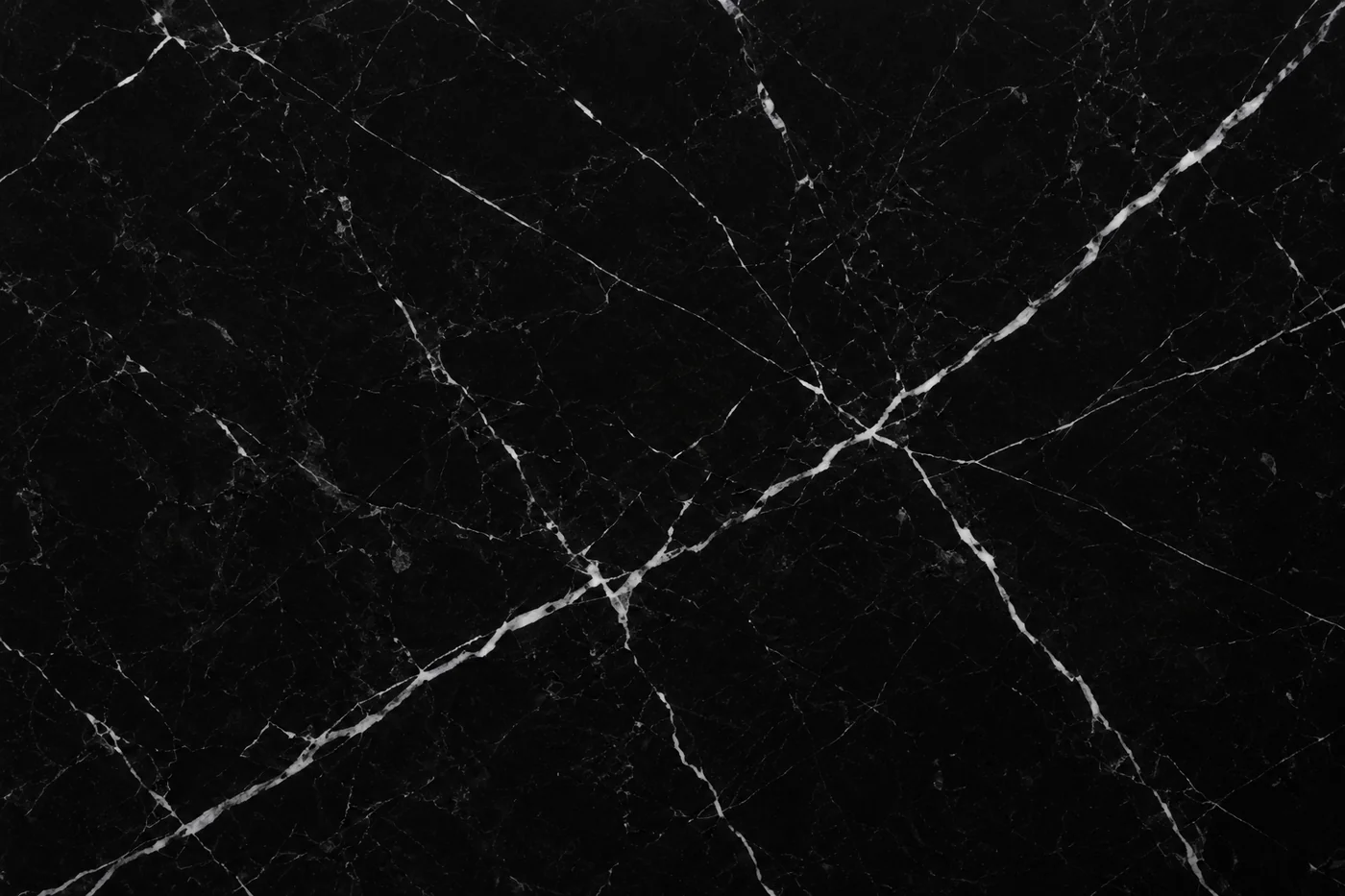
Nero Marquina
Demo material record used by the product catalogue test data.
Explore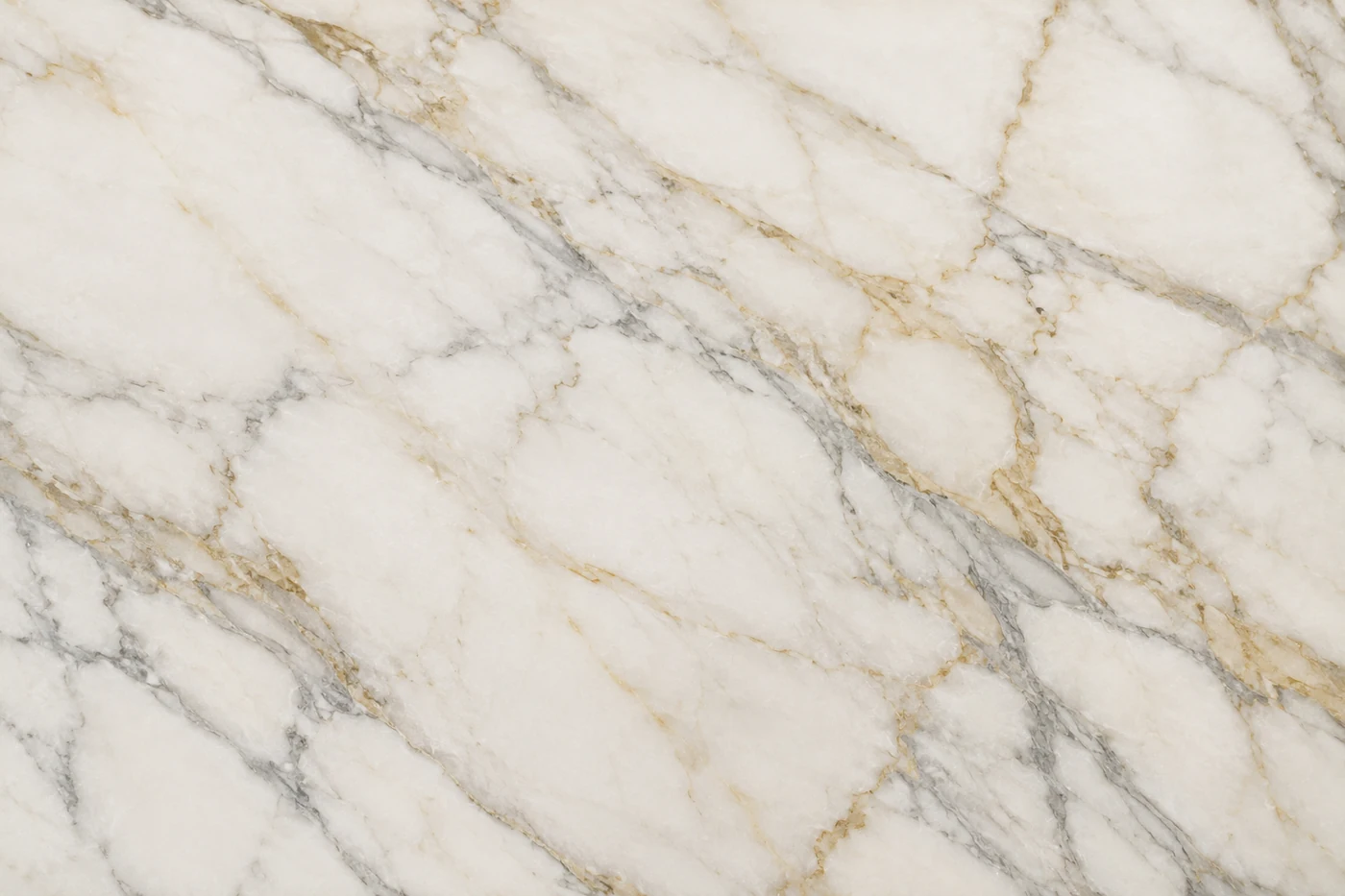
Carrara
Explore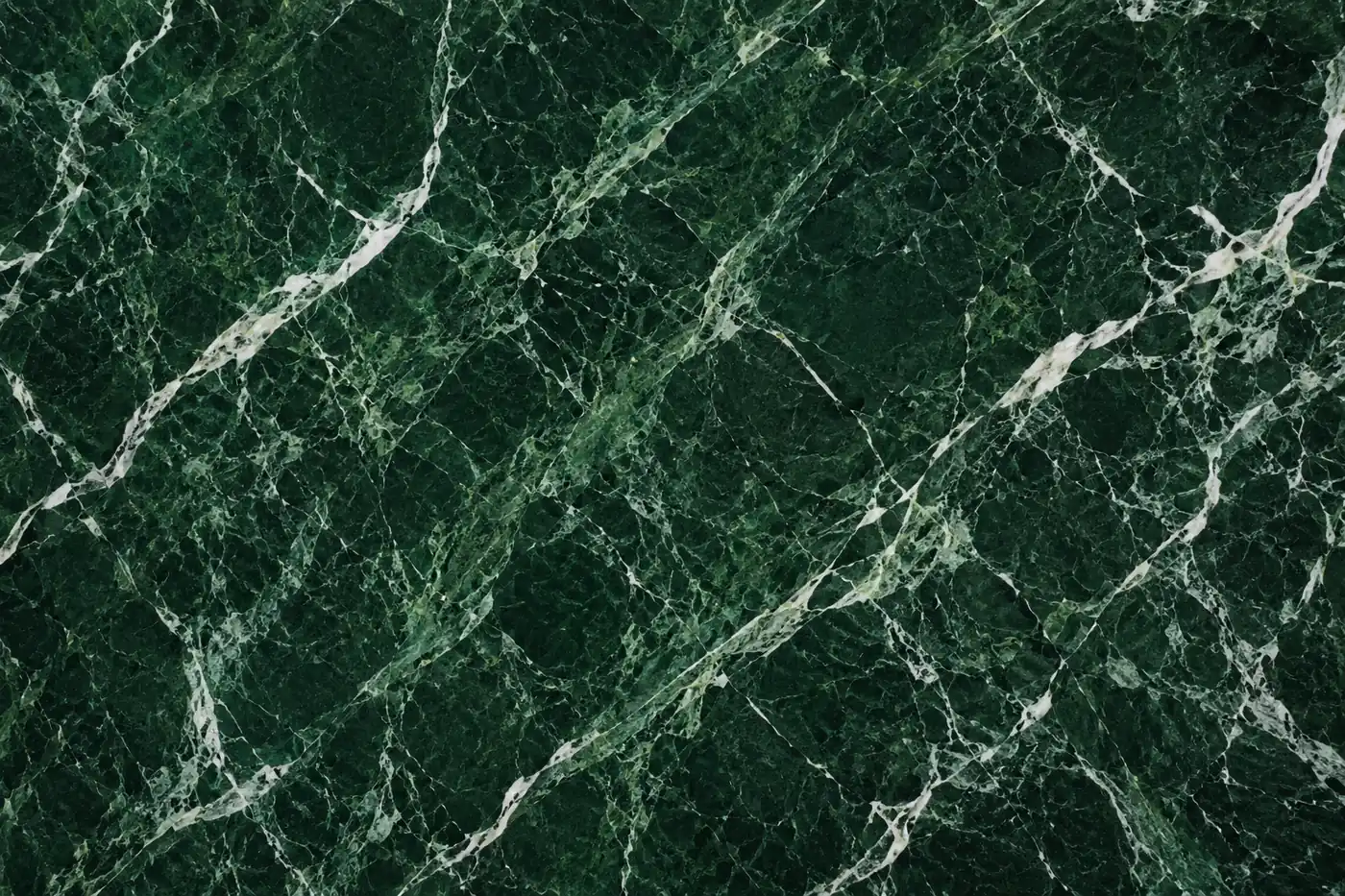
Verde Alpi
Demo material record used by the product catalogue test data.
Explore
Travertine Beige
Demo material record used by the product catalogue test data.
ExploreSURFACE FINISH
Pick a Finish That Matches the Look and Care Routine
A polished finish deepens colour and increases reflection, which can make veining appear more pronounced. A honed finish produces a lower-sheen surface and a quieter, more tactile appearance.
Brushed, satin, leathered and textured finishes may be available for selected materials. Their appearance and cleaning behaviour vary, so finish choice should be confirmed against the exact stone and intended use.
No finish removes the need for suitable care. Spills should be wiped promptly, abrasive cleaners should be avoided, and the tray should be handled according to its weight and edge construction.
Common Finish Characters
Polished
High sheen that deepens colour and reflection.
Honed
Smooth matte character with reduced reflection.
Leathered
Textured surface available for selected darker stones.
Satin
Soft, controlled sheen for selected materials and surfaces.
HANDLING
Consider Weight, Rim Height and Internal Space
Natural stone is dense, and tray weight increases quickly with length, width and base thickness. A large tray may be intended to remain in place rather than being carried frequently.
Lift a substantial tray from the base with both hands instead of pulling from the rim or handle. Place it on a stable, level surface and use suitable protective pads where the furniture finish requires them.
Rim height affects both appearance and function. A higher rim can contain objects more clearly, while a lower rim improves access and can make the piece appear lighter. Internal space should always be checked separately from the external footprint.
Common Selection Mistakes
Choosing a tray that is too large Measure the usable surface and preserve visual clearance.
Ignoring the internal usable area A raised rim and rounded corners reduce the working space.
Selecting only from a photograph Natural veining, tone and mineral movement will vary.
Underestimating weight Large solid-stone trays may need two-handed lifting.
Using unsuitable cleaners Acidic or abrasive products can damage sensitive surfaces.
Assuming every material suits every shape Production feasibility depends on the slab and design.
Before You Order
- Measure the usable surface
Record width, depth and nearby objects that reduce clearance.
- Confirm external and internal dimensions
Check the usable area inside the rim.
- Review material variation
Understand the expected colour and veining range.
- Choose the finish
Balance sheen, texture and maintenance expectations.
- Consider movement and weight
Decide whether the tray will remain in place or be moved often.
- Ask about bespoke feasibility
Custom dimensions depend on stone, thickness and production review.
RELATED PIECES
Marble Trays to Explore
These examples show different shapes, materials and proportions. Product availability and exact veining should be confirmed on the individual product page.
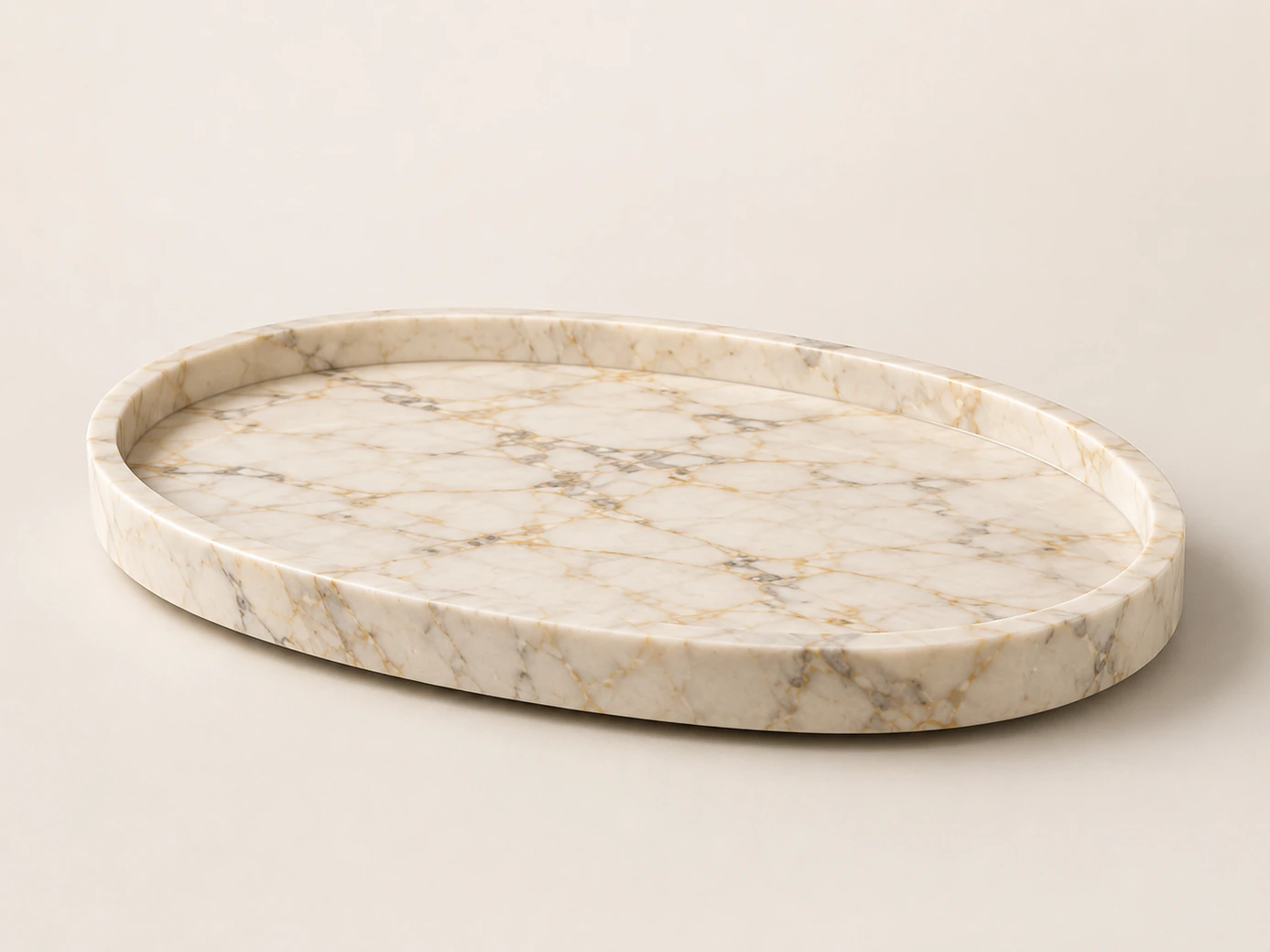
Demo Calacatta Oro Round Tray
Calacatta Oro
Round · Ø 50 × 4.5 cm
AED 1,250
Made to Order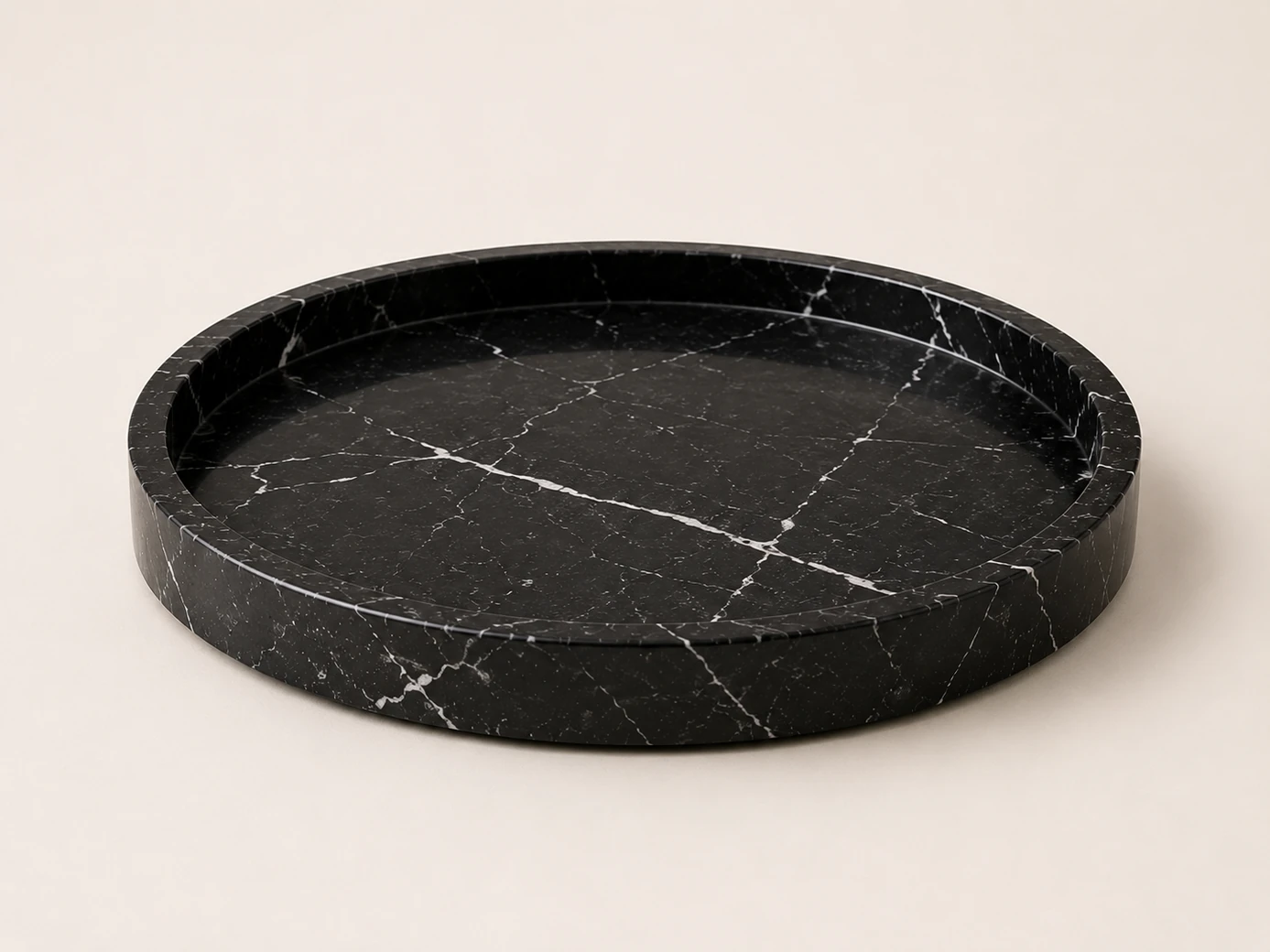
Demo Nero Marquina Rectangular Tray
Nero Marquina
Rounded Rectangle · 50 × 34 × 4.5 cm
AED 980
In Stock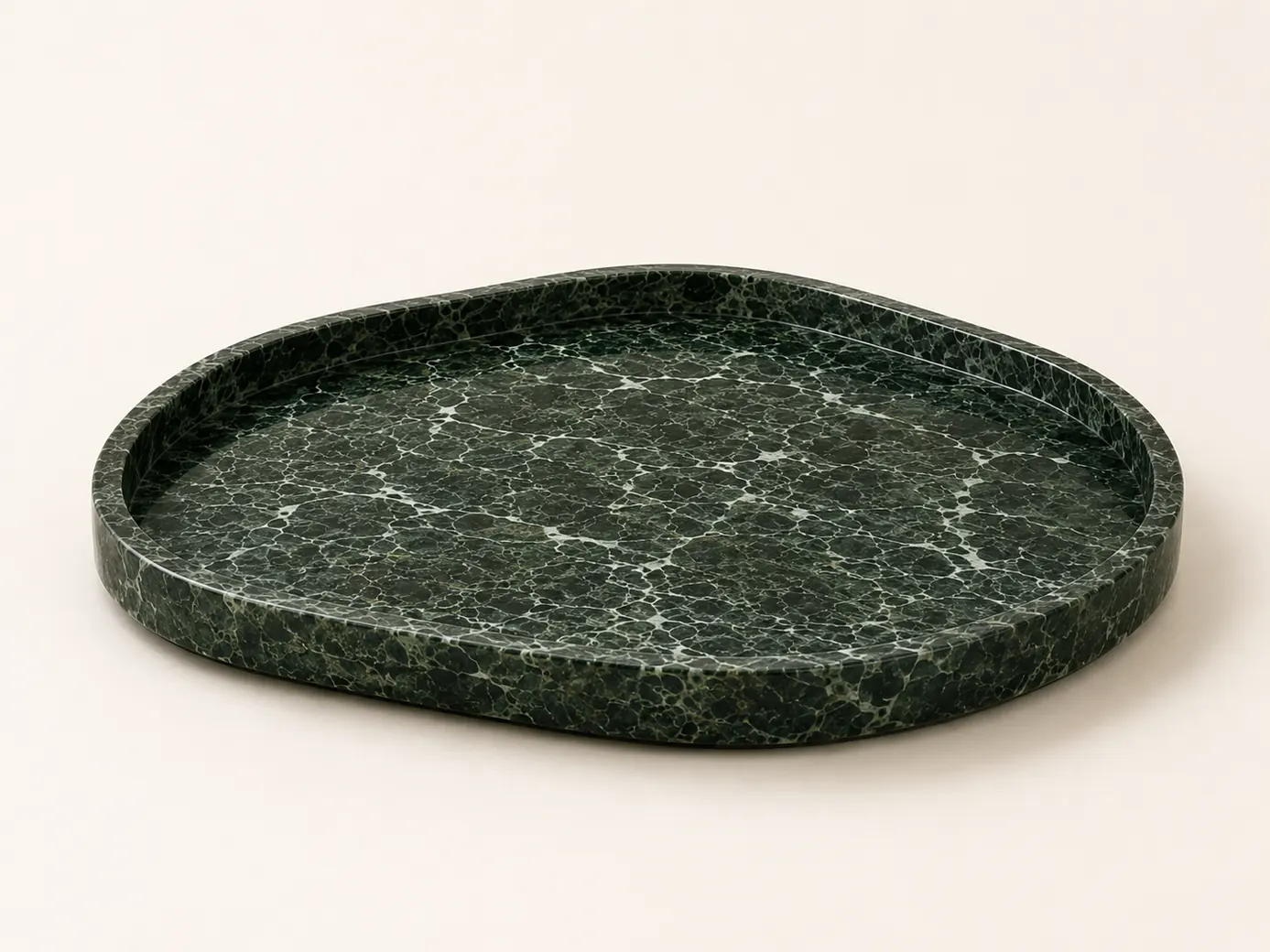
Demo Verde Alpi Oval Tray
Verde Alpi
Oval · 48 × 36 × 4.5 cm
AED 1,380
Made to Order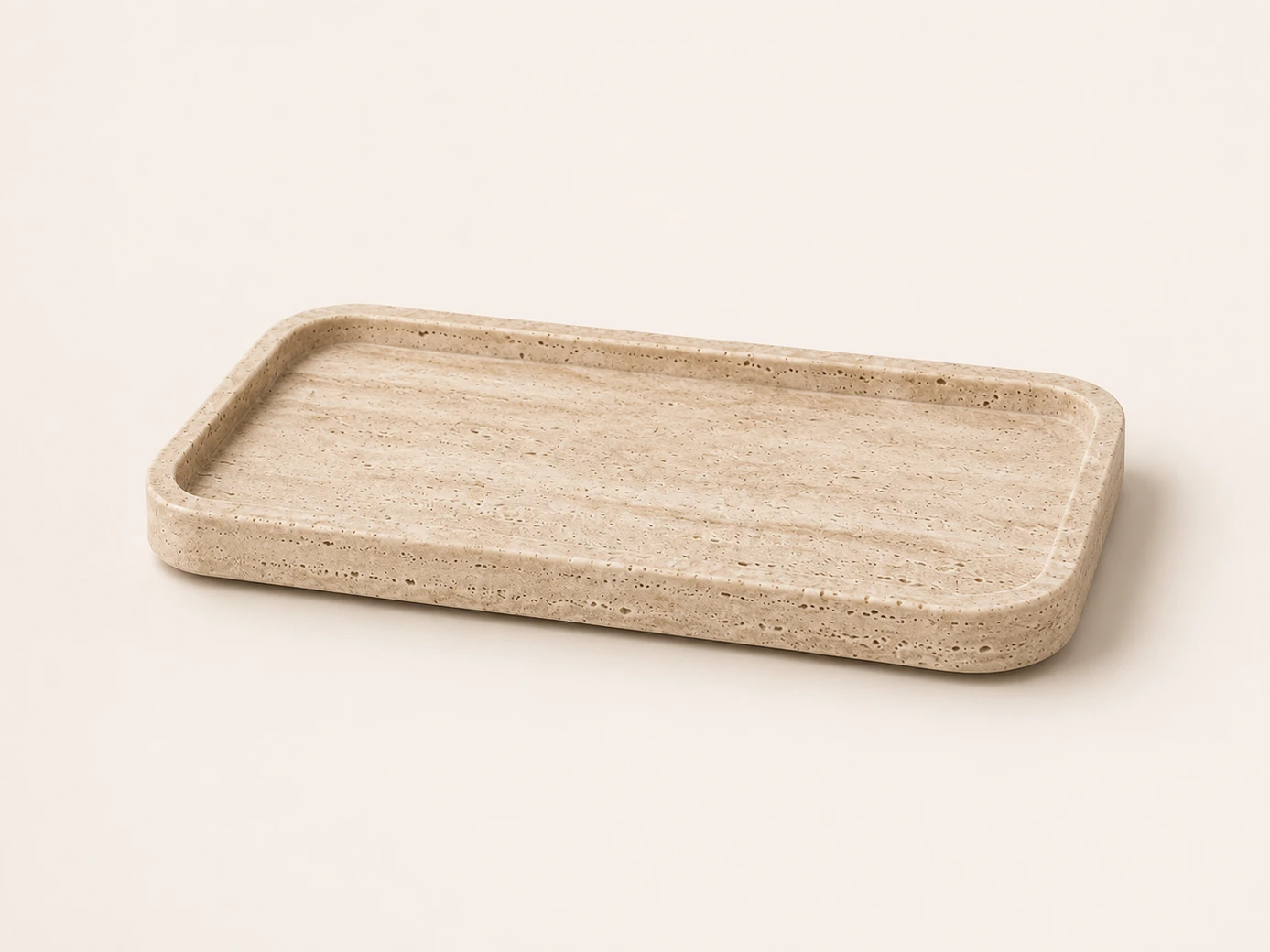
Demo Travertine Beige Rectangle Tray
Travertine Beige
Rectangle · 38 × 21 × 3.5 cm
AED 780
In StockShape Comparison at a Glance
| Shape | Visual Character | Usable Area | Common Surfaces |
|---|---|---|---|
| Round | Soft and centred | Moderate | Round tables, ottomans and compact consoles |
| Oval | Gentle and elongated | Good length without hard corners | Coffee tables, vanities and sideboards |
| Rounded Rectangle | Structured and versatile | High | Rectangular tables, consoles and serving settings |
| Capsule | Long and sculptural | Efficient for narrow objects | Consoles, perfume displays and long tables |
| Organic | Expressive and decorative | Design dependent | Statement interiors and bespoke schemes |
Advantages and Considerations
Why Choose a Stone Tray
- Distinctive material character
- Long-term decorative presence
- Wide choice of stones, shapes and finishes
- Bespoke dimensions may be available
What to Review
- Natural colour and veining vary
- Stone is heavier than many alternatives
- Care depends on the exact material and finish
- Large or complex designs require production approval
BESPOKE OPTIONS
Need a Tray for Exact Dimensions?
Share the intended surface, external dimensions, preferred material, finish and quantity so the team can review feasibility.
Questions, Answered
Frequently Asked Questions
What size tray should I choose for a coffee table?
Measure the usable surface and choose a tray that leaves visible space around the arrangement. The exact proportion depends on the table shape, intended objects and the tray’s external dimensions.
Learn moreWhich shape works best for a rectangular table?
Rounded rectangles and ovals often use the available length efficiently, while a round tray can create deliberate contrast. The best choice depends on the objects and remaining surface clearance.
Are marble trays heavy?
Natural stone is dense, and weight increases with size and thickness. Review the approximate product weight and lift substantial trays from the base with both hands.
Can I order a custom size or shape?
Bespoke dimensions and shapes may be available after the selected stone, slab condition, thickness, rim profile and production requirements are reviewed.
Learn moreWhich materials are best for everyday use?
Suitability depends on the exact material, finish and intended use. Marble, travertine, granite, quartzite, onyx and refined surfaces each have different appearance and care characteristics.
How should I clean a natural-stone tray?
Wipe spills promptly with a soft cloth and a suitable pH-neutral cleaner. Avoid acidic or abrasive products and follow the care guidance for the exact material and finish.
Learn moreWill the tray look exactly like the product photograph?
No two natural-stone pieces are identical. Colour balance, veining and mineral movement vary from one cut to another.
What should I include in a bespoke request?
Provide the intended use, supporting-surface dimensions, preferred external size, shape, material, finish, quantity and any personalisation requirements.
READY TO CHOOSE?